Column Bases and Bollards Are Hidden Wear Zones in Busy Warehouses
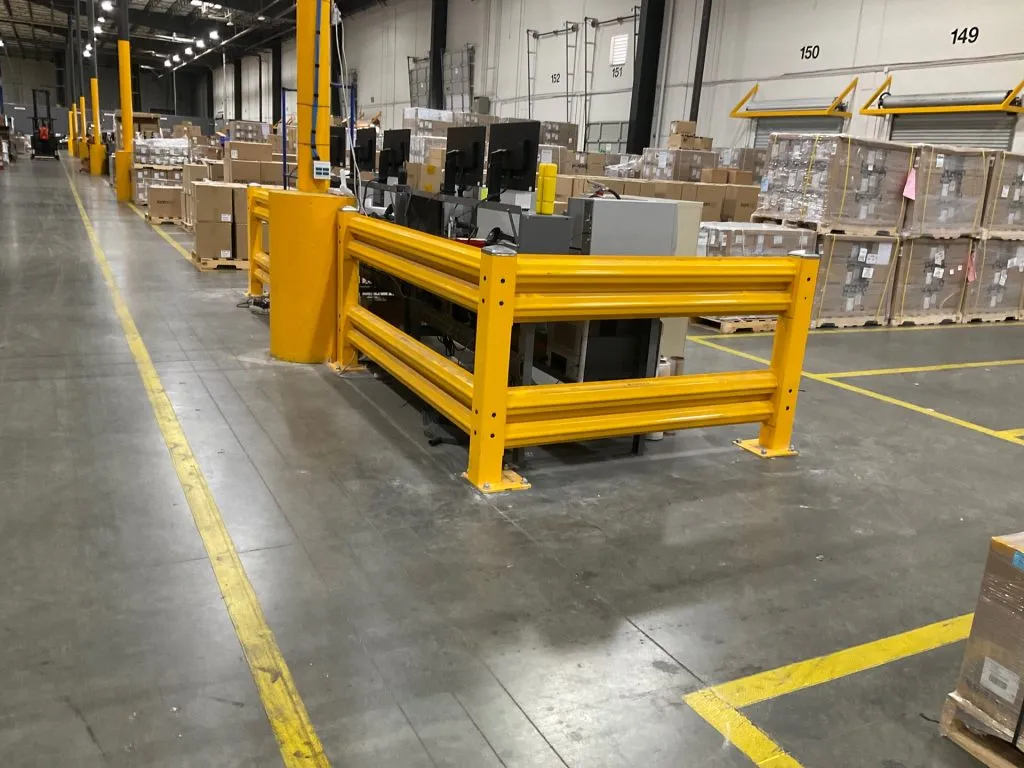
Warehouse flooring damage does not always begin in the middle of a forklift aisle. Structural columns, protective bollards, rack guards, door frames, and equipment posts create small zones where vehicle movement becomes tighter and impact risk increases. These areas can receive repeated wheel turns, pallet contact, cleaning debris, and occasional strikes while remaining easy to overlook during general floor inspections. Treating these details as separate wear zones can help facility managers plan repairs and resurfacing more effectively.
Tight Clearances Change Vehicle Movement
Forklift operators usually have more space in open aisles than around columns or protective barriers. Near fixed obstacles, vehicles may turn more sharply, brake, reverse, or reposition loads.
These movements can create concentrated abrasion in a relatively small area. The floor may show tire wear, scratches, or coating loss even when nearby straight travel lanes remain in better condition.
Managers should identify these high-maneuvering locations before a flooring project begins rather than assuming wear will be uniform throughout the warehouse.
Bollards Create Impact-Prone Edges
Bollards protect doors, equipment, utilities, and structural elements, but the floor around their bases can become vulnerable.
Forklifts, pallets, and carts may strike the surrounding area even when the bollard itself prevents more serious damage. Anchor points can also create interruptions in the slab.
Facilities considering Warehouse Resin Flooring In Nj should include bollard bases in the substrate assessment. Cracked concrete, loose patches, or damaged coating around anchors should be addressed before a new resinous system is applied.
Column Bases Collect Debris
Structural columns often sit close to rack lines, travel routes, or storage areas. Their bases can collect dust, stretch-wrap fragments, pallet splinters, and other debris that larger cleaning machines may not reach easily.
If the surrounding concrete is rough or chipped, cleaning becomes even more difficult. A continuous resinous surface can make these small perimeter areas easier to maintain, provided the substrate is properly prepared first.
Housekeeping teams can help identify which columns or barriers repeatedly collect debris.
Rack Guards Affect Floor Access
Rack protection systems may include steel guards, posts, or barriers fixed directly to the slab. These components can restrict access during grinding, repair, and coating application.
Where practical, flooring contractors should understand which guards can be removed temporarily and which must remain in place. Tight preparation around fixed steelwork may require smaller tools and additional hand work.
Leaving old coating or contamination around these bases can create inconsistent adhesion compared with the open floor.
Anchor Damage Needs Proper Repair
Warehouses often change layouts over time. Old bollards or rack guards may be removed, leaving anchor holes and damaged concrete behind.
A qualified Resin Floor Contractor In New Jersey should assess these former mounting locations before resurfacing. Holes and weak edges may need suitable repair, so the finished floor has a more consistent surface.
Simply coating over abandoned anchor points can leave depressions or visible defects beneath the new system.
Texture Should Not Complicate Cleaning
Areas around columns and barriers sometimes experience tracked moisture or oil, particularly near loading or equipment zones. Additional traction may be useful, but heavy texture can make tight perimeter cleaning harder.
The surface profile should match the actual risk. Dry interior columns may not need the same finish as bollards near dock doors or maintenance areas.
Using texture selectively can support traction without making every obstacle zone unnecessarily difficult to clean.
Inspection Routes Should Include Fixed Obstacles
Routine floor inspections often focus on aisles, joints, and loading areas. Column bases and bollards should be added to that list.
Managers can look for chips, cracks, tire abrasion, loose repairs, or coating damage around anchor points. These signs may reveal recurring contact between vehicles and fixed obstacles.
If one location repeatedly deteriorates, the solution may involve both flooring repair and a review of traffic clearance or protective-barrier placement.
Resurfacing Is a Chance to Review Layout
A flooring renovation provides a useful opportunity to examine whether bollards, rack guards, and traffic routes still match the current warehouse layout.
Some barriers may have been installed for equipment that no longer exists, while newer high-risk areas may need additional protection. Floor markings can also be updated to provide clearer clearance around columns or fixed structures.
Coordinating barrier placement with the flooring plan can reduce unnecessary drilling and patching after the new surface is complete.
Conclusion
Columns, bollards, rack guards, and fixed posts occupy only a small percentage of warehouse floor area, but they can become concentrated wear points because traffic, impact, debris, and anchors all meet around them.
A stronger flooring strategy includes these details during assessment rather than focusing only on open aisles. Proper substrate repair, careful preparation around fixed obstacles, practical texture, routine inspection, and coordinated barrier planning can create a more consistent resinous floor while reducing recurring damage in the tight spaces that warehouse traffic encounters every day.
