How to Avoid Travel Scams and Travel Safely
Traveling allows people to explore new places, experience different cultures, and create unforgettable memories. However, along with exciting opportunities, travelers may also face risks such as scams and fraud. Tourist destinations often attract scammers who target unfamiliar visitors through misleading offers, fake services, and dishonest practices.
Learning how to avoid travel scams is an important skill for every traveler. Being aware of common tricks, researching destinations, protecting personal information, and making careful decisions can help reduce risks.
Smart travelers do not avoid new experiences; they simply prepare themselves to recognize suspicious situations and respond wisely. With proper awareness and planning, travelers can enjoy their journeys with greater confidence and safety.
Understand Why Travelers Become Targets
Tourists are often targeted because they may be unfamiliar with local customs, prices, transportation systems, and common practices.
Scammers usually take advantage of situations where travelers are distracted, confused, or in a hurry. They may use friendly conversations, urgent requests, fake discounts, or attractive offers to gain trust.
Understanding that scams can happen anywhere helps travelers remain alert without becoming overly cautious or missing out on experiences.
Awareness is the first step toward preventing travel-related fraud.
Research Your Destination Before Traveling
One of the best ways to avoid scams is to research your destination before departure.
Learning about common tourist scams, local transportation methods, average prices, and trusted services helps travelers recognize unusual situations.
Reading travel guides, checking official information, and learning from other travelers’ experiences can provide valuable insights.
Knowing what is normal in a destination makes it easier to identify suspicious behavior.
Preparation allows travelers to make informed decisions instead of relying only on strangers for guidance.
Be Careful With Unbelievable Deals
Scammers often attract travelers with offers that appear too good to be true.
Examples include extremely cheap tours, fake accommodation discounts, unrealistic shopping deals, or unexpected prizes.
While finding good deals is part of smart travel planning, travelers should carefully evaluate offers before making payments.
Comparing prices, checking reviews, and verifying service providers can help avoid financial losses.
A genuine deal usually has clear information, transparent pricing, and reliable details.
Protect Your Personal Information
Personal information is valuable, and travelers should be careful about sharing sensitive details.
Scammers may attempt to collect passport information, banking details, passwords, or personal data through fake websites, messages, or conversations.
Travelers should avoid sharing unnecessary information and should use secure methods when handling financial transactions.
Keeping copies of important documents separately and protecting digital accounts can provide additional security.
Good information security habits are essential while traveling.
Be Aware of Fake Transportation Services
Transportation scams are common in many tourist areas. Travelers may encounter unofficial taxis, fake drivers, or people offering expensive transportation services.
Before using transportation, it is better to understand official options available at the destination.
Using trusted transportation services and confirming prices before starting a journey can prevent unexpected charges.
Travelers should be cautious when strangers strongly insist on providing transportation or services without a clear reason.
Avoid Unofficial Tour Guides
Many destinations have genuine tour operators who provide valuable experiences, but travelers may also encounter fake guides.
Unofficial guides may provide incorrect information, pressure tourists into shopping stops, or charge unreasonable fees.
Before booking a tour, travelers should verify the service provider’s reputation and understand what is included.
Professional guides usually provide clear details about pricing, schedules, and services.
Researching in advance helps travelers choose reliable experiences.
Be Careful With Currency Exchange Scams
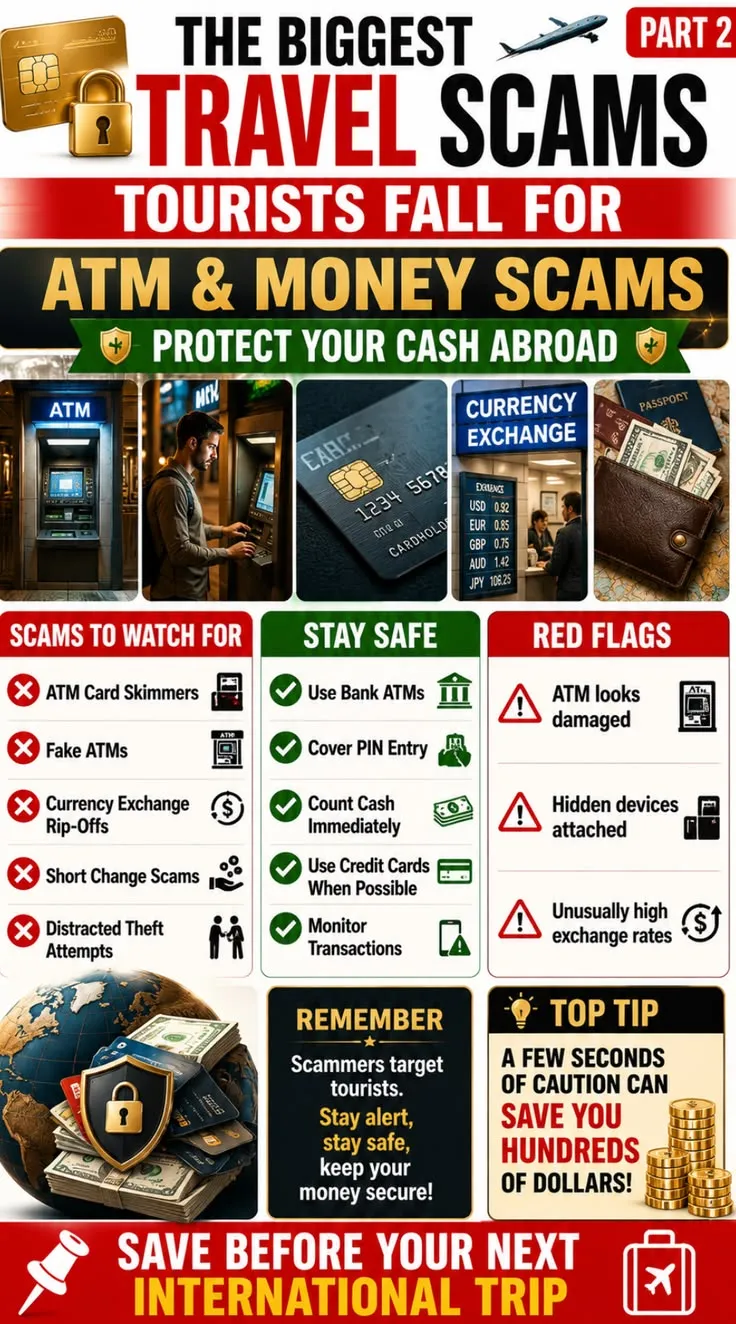
Currency-related scams can happen when travelers exchange money in unfamiliar places.
Some dishonest individuals may offer unfair exchange rates, provide incorrect amounts, or use confusing calculations.
Travelers should understand approximate currency values before arriving at a destination.
Using trusted exchange services and carefully checking transactions can reduce the risk of losing money.
Avoiding rushed decisions during currency exchanges is an important safety habit.
Avoid Distractions in Crowded Places
Crowded locations such as markets, public transportation areas, and tourist attractions can sometimes create opportunities for theft and scams.
Some scammers work through distractions, where one person creates confusion while another attempts to take valuables.
Travelers should keep belongings secure, stay aware of surroundings, and avoid displaying expensive items unnecessarily.
Simple precautions can significantly reduce the chances of becoming a target.
Be Careful When Accepting Unsolicited Help
Friendly locals can make travel experiences better, but travelers should be cautious when strangers offer unexpected assistance.
Some scammers create situations where they appear helpful but later demand money or create pressure.
For example, someone may offer unnecessary help with luggage, tickets, or directions and then request payment.
Accepting help is not always dangerous, but travelers should evaluate situations carefully.
Use Secure Payment Methods
Financial safety is an important part of avoiding travel scams.
Travelers should use secure payment methods and monitor financial activity during trips.
Carrying limited cash, keeping backup payment options, and avoiding suspicious payment requests can reduce risks.
Travelers should also be cautious when using public networks for financial transactions because unsecured connections may expose personal information.
Responsible financial habits help protect money while traveling.
Be Cautious With Online Travel Bookings
Many travel arrangements are now completed online, including flights, hotels, and activities.
However, fake booking websites and misleading offers can create problems for travelers.
Before making payments, travelers should verify websites, read terms carefully, and check customer feedback.
Avoiding suspicious links and unknown platforms can prevent online travel fraud.
Digital awareness is just as important as physical safety during modern travel.
Learn Basic Local Information
Understanding basic local information can help travelers avoid many problems.
Learning common transportation methods, local customs, approximate costs, and emergency contacts makes travelers more confident.
Scammers often target people who appear confused or unfamiliar with their surroundings.
Basic knowledge helps travelers communicate better and make smarter decisions.
Trust Your Instincts
One of the most valuable travel safety skills is trusting your instincts.
If a situation feels uncomfortable, rushed, or suspicious, it is better to step away and evaluate carefully.
Scammers often use pressure tactics to prevent people from thinking clearly.
Taking time to make decisions and asking questions can prevent many mistakes.
Confidence and awareness help travelers handle unfamiliar situations effectively.
What To Do If You Experience a Travel Scam
If someone becomes a victim of a travel scam, staying calm is important.
Travelers should document important details, protect remaining money and documents, and contact appropriate authorities if necessary.
Reporting scams can help protect other travelers and improve awareness.
Learning from the experience can also help travelers make safer decisions in the future.
Frequently Asked Questions (FAQs)
What are the most common travel scams?
Common travel scams include fake services, overpriced transportation, fraudulent deals, currency scams, and online booking fraud.
How can I stay safe while traveling alone?
Solo travelers should research destinations, protect personal information, stay aware of surroundings, and use trusted services.
Are all locals offering help suspicious?
No. Many locals genuinely want to help travelers. However, travelers should evaluate situations carefully and avoid feeling pressured.
Conclusion
Avoiding travel scams does not mean avoiding adventure. It means traveling with awareness, preparation, and smart decision-making.
By researching destinations, protecting personal information, choosing reliable services, and recognizing warning signs, travelers can reduce risks and enjoy safer experiences.
Smart traveling is about balancing curiosity with caution. With the right knowledge and preparation, travelers can explore new destinations confidently while protecting their money, belongings, and personal safety.
